
Interior Designer in Belgravia
Juliette Byrne is an award-winning luxury interior designer in Belgravia, working from the studio in the Chelsea Design Quarter on the King's Road, a short drive away. Founded in 1988, the studio has restored and furnished Grade II listed stucco townhouses, mews houses, apartments and duplexes across Belgravia.
Juliette leads every project personally with a team of six designers, working alongside architects, contractors and the estate's surveyors from the first drawings through to a turnkey installation. The first consultation is complimentary and there is no minimum project size. The studio's Grade II listed townhouse in Belgravia, renovated over six floors, was completed in 10 months and went on to win at the UK Property Awards.
Belgravia Interior Design Projects
A selection of the studio's work in Belgravia, from a Grade II listed six-storey townhouse to a family home and a turnkey duplex.
Listed Townhouses, Mews Houses and Apartments in Belgravia
Belgravia was built for the Grosvenor family in the 1820s as a single estate of white stucco terraces and garden squares, with mews streets running behind them. Most of its houses are Grade II listed, the district is a City of Westminster conservation area, and the Grosvenor Estate still oversees how its buildings are altered.
Within those constraints, a Belgravia townhouse over five storeys or more needs a lift, risers, plant and storage solved on every floor without disturbing the cornicing and staircases that give the house its character. The mews houses behind the squares are usually reworked from the inside, and the studio has secured permission for extensions, including underground parking and private outdoor space. Where a grand house has been divided into apartments, the tall ceilings and original plaster are kept and the scheme is designed around them. The studio also works across neighbouring Chelsea, Kensington and Mayfair.

Planning, Listed Building Consent and Grosvenor Estate Approval
Alterations in Belgravia can need three separate approvals. Westminster City Council grants planning permission and listed building consent, which for a Grade II house can cover work inside as well as to the facade. The Grosvenor Estate gives its own written consent under the Belgravia management scheme, and even freehold owners need it for extensions and basements, new or altered windows, roof terraces, air conditioning and other external plant, and for structural work inside the house. Leaseholders also need a licence to alter from their freeholder. Grosvenor's consent comes in stages with conditions attached, and the estate can phase building work to protect neighbours, which matters in the mews.
The studio starts these applications alongside the design rather than after it. Party wall awards are agreed with neighbours early, delivery and access limits are built into the programme, and long-lead items such as bespoke joinery, stone and metalwork are ordered as soon as the design is signed off, so that none of them holds up the build. Every proposal is drawn around the listing from the first sketch, which is the surest way to keep the consents moving and the design intact.
An Award-Winning Grade II Listed Townhouse in Belgravia
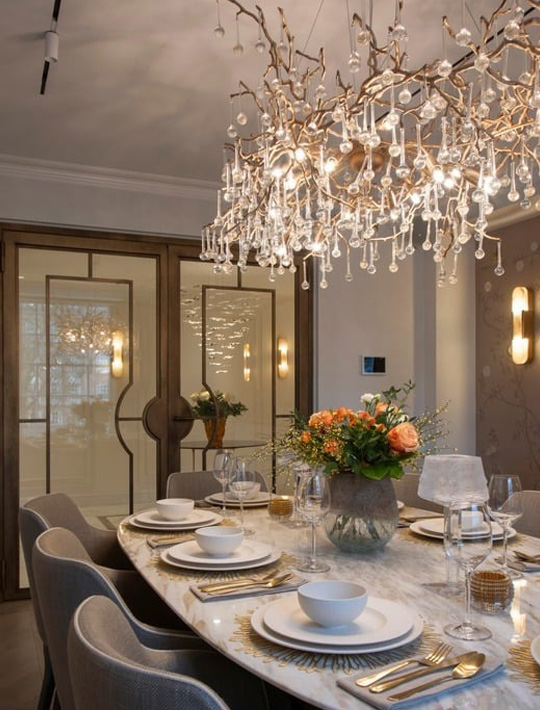
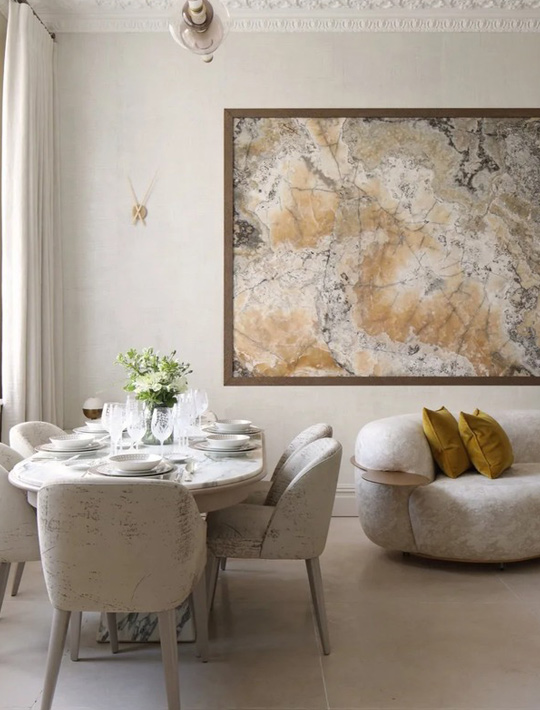
In the heart of Belgravia, the studio transformed a Grade II listed six-storey townhouse with four bedrooms, five and a half bathrooms, two home offices and a double media room. The house was stripped back, the electrical plans redrawn for smart home and audio-visual systems, and the original cornicing, wrought iron stair spindles, chimneypieces and the onyx wall in the dining room were restored. All of the joinery, furniture and artwork were designed for the house, and the whole project was delivered in 10 months. It went on to win at the UK Property Awards.
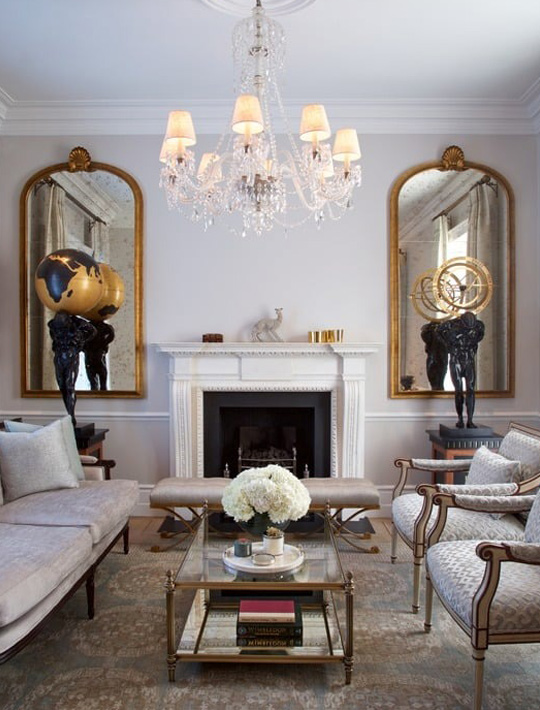
A second Grade II listed townhouse in Belgravia has a formal dining room with marble floors inset with cabochon detail and a bronze-framed mirror, an informal reception room for entertaining, and a grand drawing room around a marble chimneypiece from Thornhill Galleries.


How We Work on Belgravia Projects
Every project begins with a complimentary consultation at the property, where Juliette takes the brief: how you live, what the house needs to do, and the budget and timescale you have in mind. The work then runs in three phases. In the first, the studio produces the full design, from concept and layouts through plans, elevations, lighting, kitchens, bathrooms, joinery and soft furnishings, and every item is costed and signed off before anything is built. In Belgravia the consent applications and long-lead orders run alongside this phase, so the build is never waiting on them. The second phase is consultancy on site, checking that the contractor builds what was drawn. The third is procurement and installation, so the house is ready to move into on the day of handover.
Juliette is lead designer on every project, with one of the studio's designers running the day to day. The studio is happy to join an architect and contractor already appointed, or to recommend a team used to working in listed Belgravia houses, and you decide how involved you want to be. Read more about the full interior architecture and design service.
Interior Design Costs in Belgravia
What a Belgravia project costs depends on the size and condition of the house, the level of specification, and whether structural work, Grosvenor Estate consent or listed building consent is involved. Costs are discussed at the first consultation, and the studio then prepares a tailored fee proposal. Once you have reviewed the furniture and finishes, every item is costed and documented with complete transparency, and fees are only discussed once you wish to proceed.
The studio sets no minimum project size. A single room, a furnishing-only scheme or an apartment refresh is welcome, and a number of its larger projects started that way.
"Every project's journey begins firstly from understanding our clients, balancing their wants, needs and their ultimate vision with the context and history of the property."
Juliette Byrne
How Long a Belgravia Renovation Takes
Every Belgravia project runs to its own programme, agreed at the outset, because the scope of structural work and the consents involved vary so much from house to house. As an example, the studio's six-storey listed townhouse in Belgravia was completed in 10 months, including a full strip-out and rewiring. Where structural work needs Grosvenor Estate and listed building consent, it is worth allowing extra time at the start, which is why the studio begins those applications alongside the design rather than after it.
Aftercare, Awards and Why Clients Choose Juliette Byrne
The Belgravia townhouse above won at the UK Property Awards, and the studio's more recent work has won the design et al Elite Residential Property Award 2025 and the International Design & Architecture Award 2024. Juliette is a BIID Registered Interior Designer and has been listed among the UK's leading designers by Country & Town House, House & Garden and The Telegraph.
Each home is designed individually rather than to a signature look, and projects are delivered on budget and on time through long-standing relationships with the joiners and craftsmen the studio has worked with for years. The relationship continues after handover. Clients come back years later for a refresh, the studio helps with artwork and accessories once they have moved in, and every client receives a bound book recording the project from start to finish. Read more about Juliette and the team.
Frequently Asked Questions
How much does an interior designer cost in Belgravia?
It depends on the size and condition of the property, the specification, and whether structural work or consents are involved. Costs are discussed at the first consultation, which is complimentary, and the studio then prepares a tailored fee proposal. Every item is costed and documented with complete transparency before work begins, and fees are only discussed once you wish to proceed.
How long does a Belgravia townhouse renovation take?
Every project is different, so the programme is agreed at the outset rather than quoted as a standard figure. As an example, the studio's Grade II listed six-storey townhouse in Belgravia was completed in 10 months, including a full strip-out and rewiring. Where structural work needs Grosvenor Estate and listed building consent, allow extra time at the start.
Do we need Grosvenor Estate consent, and do you handle it?
Much of Belgravia sits within the Grosvenor Estate management scheme, so written consent from Grosvenor is needed for extensions, basements, window changes, roof terraces, external plant and structural work, even if you own the freehold. Westminster planning permission and listed building consent may be needed as well. The studio prepares the drawings these applications require and works with the architect and the estate's surveyors so that the consents run alongside the design.
Do you work on Grade II listed buildings?
Yes. Much of the studio's London work is in listed houses, including both Belgravia townhouses shown above. Every proposal is drawn around the listing from the start, original features are restored rather than replaced, and modern services are concealed within the joinery and the fabric of the house.
Can you redesign a mews house?
Yes. Belgravia's mews houses are usually reworked from the inside to gain space and light, and the studio has secured permission for extensions, including underground parking and private outdoor space. Grosvenor's consent is still needed, and the estate may phase work in a mews to protect neighbours, so access and deliveries are planned from the outset.
Can you manage the project if we live abroad?
Yes. Clients who live abroad usually ask the studio to take on more responsibility on their behalf, with regular site meetings, video calls and the final installation handled by the studio so the home is ready on arrival.
Can you start straight away?
Usually. With a team of six designers the studio can begin the brief and concept quickly, though it depends on workload at the time. In Belgravia the consent applications are the longest lead item, which is another reason to start early.
Is there a minimum project size?
No. A single room, a furnishing-only scheme or a pied-à-terre is welcome, and a number of the studio's larger projects began as a conversation about one room.
Do you work with our own architect and contractor?
Yes. The studio often joins an existing team, and can equally recommend architects and contractors who know listed Belgravia houses and the estate's requirements.

Request Our Portfolio
Enter your details below to receive our portfolio. We’d be delighted to share more information with you.
Contact Us About Your Project
We invite you to collaborate with our interior design studio.
Get in touch to discuss your project.
office@juliettebyrne.com
+44 (0)20 7352 1553